Most people who have never been tattooed in a private studio do not know what they are missing. Not because walk-in studios produce bad work — many do not — but because private studios produce a fundamentally different experience, and that difference has a direct effect on the quality of what ends up on your skin.
The distinction is not about luxury. It is about conditions. Tattooing at a high level requires focus, time, and a relationship of trust between artist and client. A busy studio floor with multiple artists working simultaneously, a reception desk taking walk-ins, and a waiting room full of strangers is not the environment where that happens most naturally.
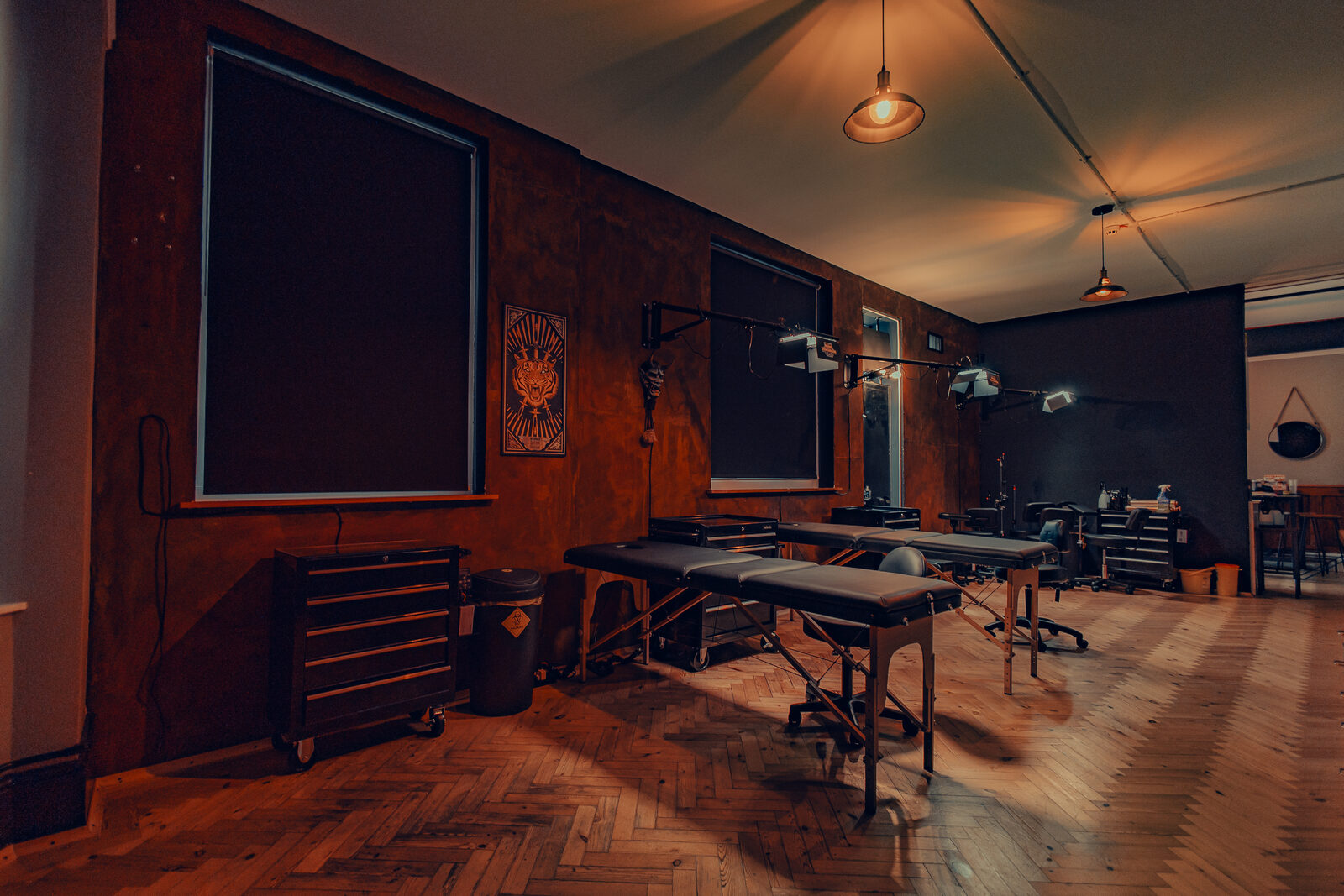
Private studio · Maxxam Art Collective · Wandsworth, London
What actually changes
The focus question
Tattooing at a high level of detail — particularly colour work, complex composition, or large-scale pieces — requires sustained concentration. An artist who is interrupted mid-session, who has to answer a question from the reception desk, or who is aware of other clients waiting does not have the same mental state as one working in complete silence with a single purpose.
This is not a criticism of busy studios — it is simply a description of conditions. The work that happens when an artist has no other obligation for the next six hours is different from the work that happens in a scheduled slot with a break built in for turnover.
The environment matters
Getting tattooed is not a passive experience. You are in a chair for up to seven hours, often in some degree of discomfort, trusting someone to make permanent marks on your body. The environment you do this in shapes how that feels — and how comfortable you are directly affects how you hold your body, which affects the work.
A private studio removes variables. There is no one watching. There is no pressure to finish quickly. There is space to talk, to pause, to make decisions together without an audience.
"My studio actually looks like part of my house, because I really enjoy spending time with my clients — watching TV shows together, making coffee for them. That was my dream, and I have it."
Volkan Demirci · Tattoo Life MagazineWhat's included
The relationship factor
For a single tattoo, the relationship between artist and client matters but is not the defining factor. For a full sleeve — five, six, seven sessions over the course of a year — it is everything.
You will spend more time with your tattoo artist than with most people in your life during that period. The trust that builds across sessions — understanding how you respond to pain, what you like and do not like, how the design is evolving — produces better decisions. Better decisions produce better work.
This is not something that can be replicated in a studio where the artist sees a different client every hour. It is the specific product of repeated, focused, private collaboration.
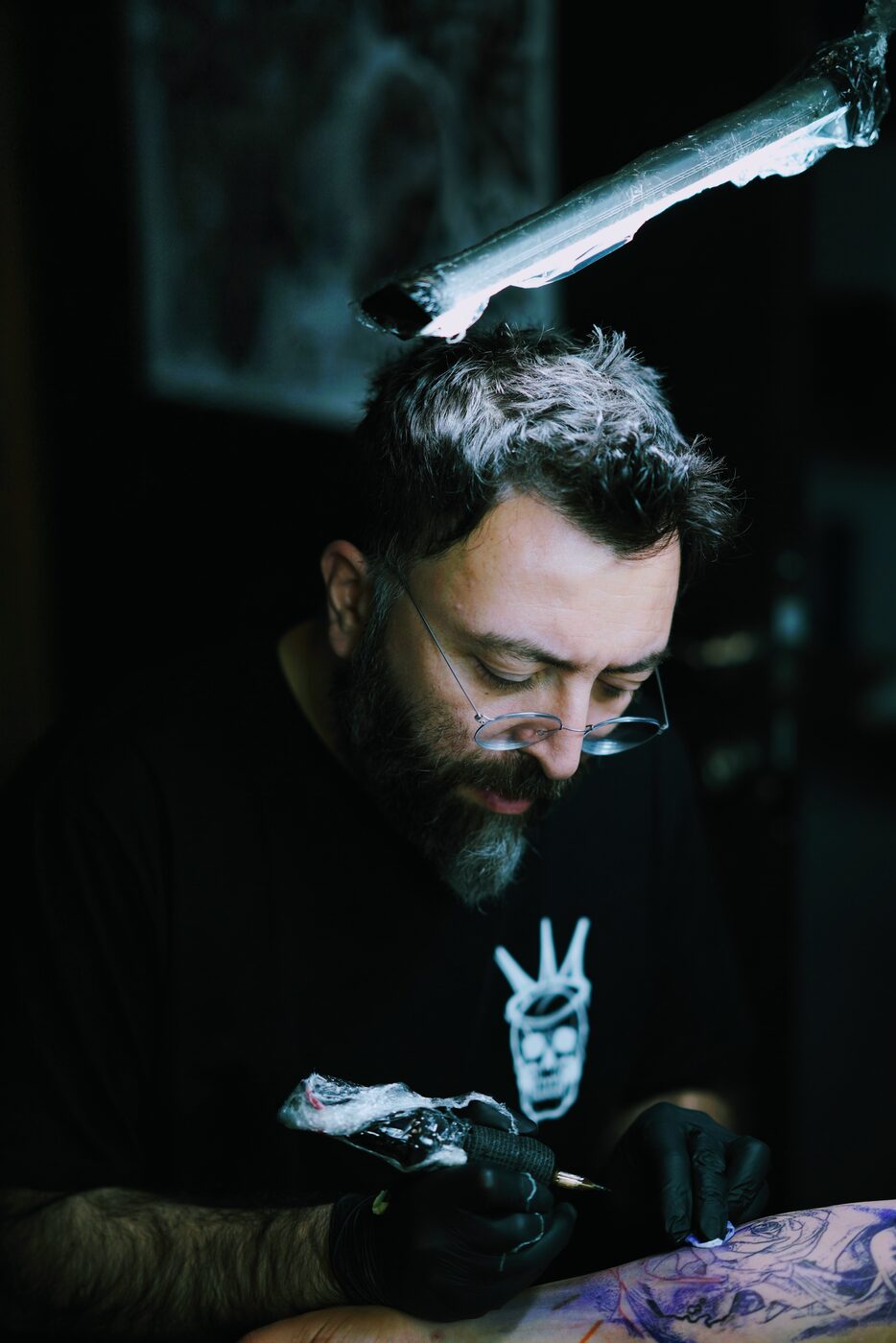
Session in progress · Private studio · Wandsworth, London
Is it for everyone?
No. If you want a small piece done quickly, a walk-in studio is the right choice. Private studios exist for a specific kind of client: someone committed to a serious piece of work, willing to invest the time and money it requires, and looking for a genuine collaboration rather than a transaction.
If that is you — the private studio model is not a premium option. It is simply the right environment for what you are trying to do.
Volkan Demirci has worked from a private studio in Wandsworth, London for years. Every session is one client, one artist, full focus. Clients travel from across Europe for this work.