A full sleeve tattoo is not like any other tattoo. It is not a single piece you decide on, book, and collect. It is a project — one that takes months, requires real collaboration between you and your artist, and will be visible on your body every day for the rest of your life.
Done well, it is one of the most powerful things you can wear. Done without the right preparation — rushed, under-researched, or with the wrong artist — it is extremely difficult to undo.
This guide covers everything you need to know before committing, from how many sessions to expect and what it costs, to what the design process actually looks like and how to choose an artist in London who is right for this scale of work.
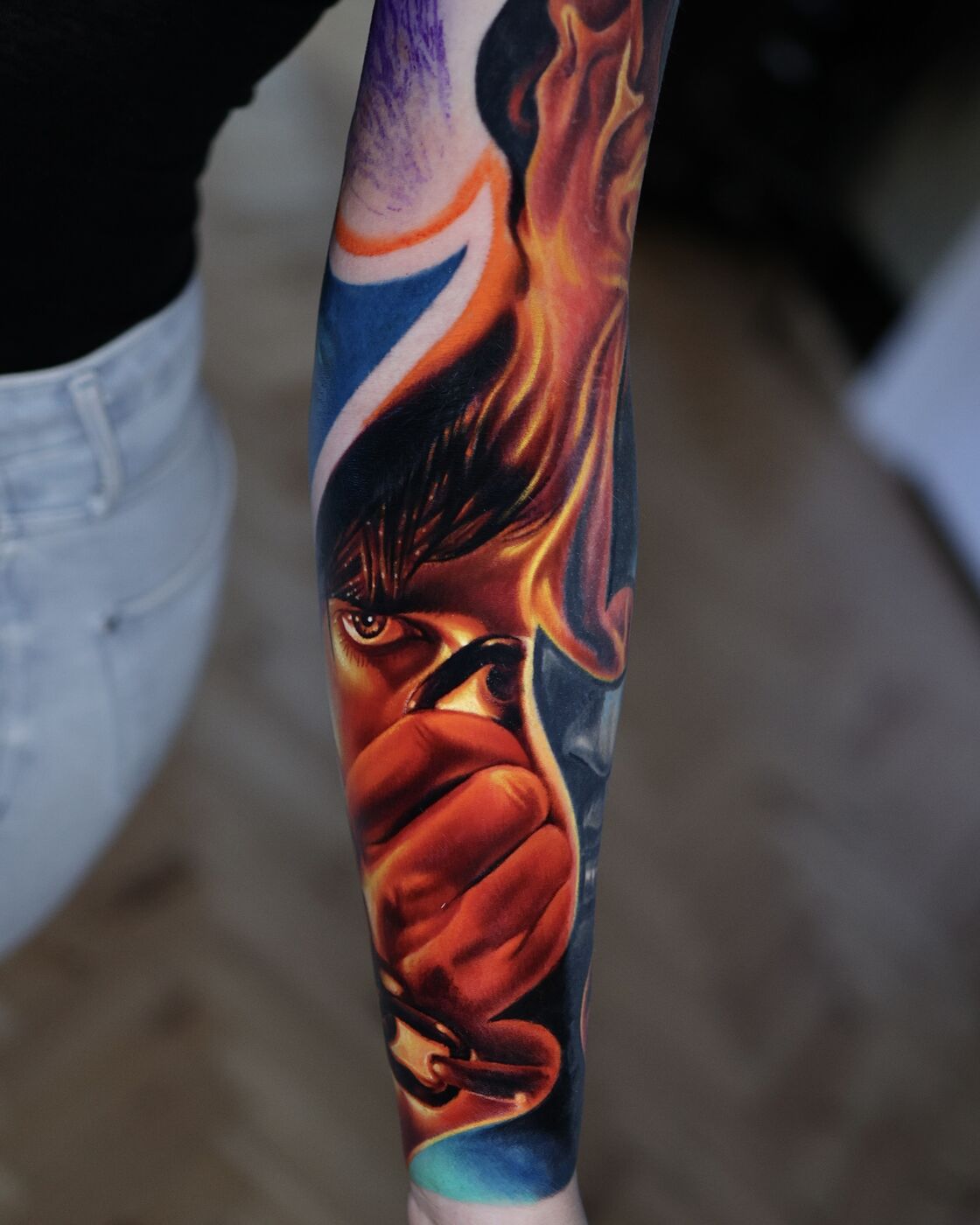
Full arm sleeve · Modern Japanese Surrealism · Volkan Demirci, Wandsworth, London
How many sessions?
A full sleeve — shoulder to wrist — typically requires between 5 and 7 sessions with an experienced artist working at a high level. Each session runs 5 to 7 hours. That is a minimum of 25 hours of tattooing, spread across several months to allow proper healing between visits.
The exact number depends on several factors: the complexity of the design, how much detail and colour is involved, how well your skin heals, and how the work builds across sessions. Some sleeves take longer. Very rarely do they take fewer sessions than expected.
What does it cost?
In London, a full sleeve from a serious artist working at a high level starts at around £6,000. This is not a figure to negotiate down — it reflects the time involved, the level of design work, and the quality of materials used.
Be wary of prices significantly below this. A sleeve that costs £2,000 in London has either been rushed, executed by someone still developing their skills, or both. The skin has a memory. Work done poorly is extraordinarily difficult and expensive to correct.
The Design Day
One of the most important — and most overlooked — parts of getting a full sleeve is what happens before the first session. At this level of work, a dedicated design consultation is not optional. It is the difference between a sleeve that feels like it belongs to you and one that happens to be on your arm.
At Volkan's private studio in Wandsworth, any project of five or more sessions includes a complimentary Design Day. This is a face-to-face session — no needles, no cost — where the concept is developed together. Your ideas, your body, your story. The design is built around you, not applied to you.
"Watching TV shows together, making coffee for my clients and having a design day for the big project was my dream — and I have it. My studio actually looks like part of my house, because I really enjoy spending time with my clients."
Volkan Demirci · Tattoo Life MagazineChoosing the right artist
In London there are hundreds of tattoo artists and dozens of studios. For a full sleeve, the shortlist should be very short. Here is what actually matters at this scale of work.
Consistency across a portfolio
Look at their sleeves specifically — not their best single pieces. A full sleeve requires an artist who can maintain quality, composition, and vision across many sessions and many months. The work should look like one thing, not a collection of individual tattoos placed next to each other.
A clear design language
The best artists have a recognisable visual identity. You should be able to look at a piece and know who made it without reading the name. If every piece in a portfolio looks like a different artist made it, that artist is versatile — but not necessarily the right choice for the most ambitious work of your life.
How they talk about the process
Pay attention to how an artist talks about their work. Are they interested in your story, your body, your idea? Or are they primarily interested in executing a pre-existing design onto available skin? The difference is significant over the course of a year-long project.
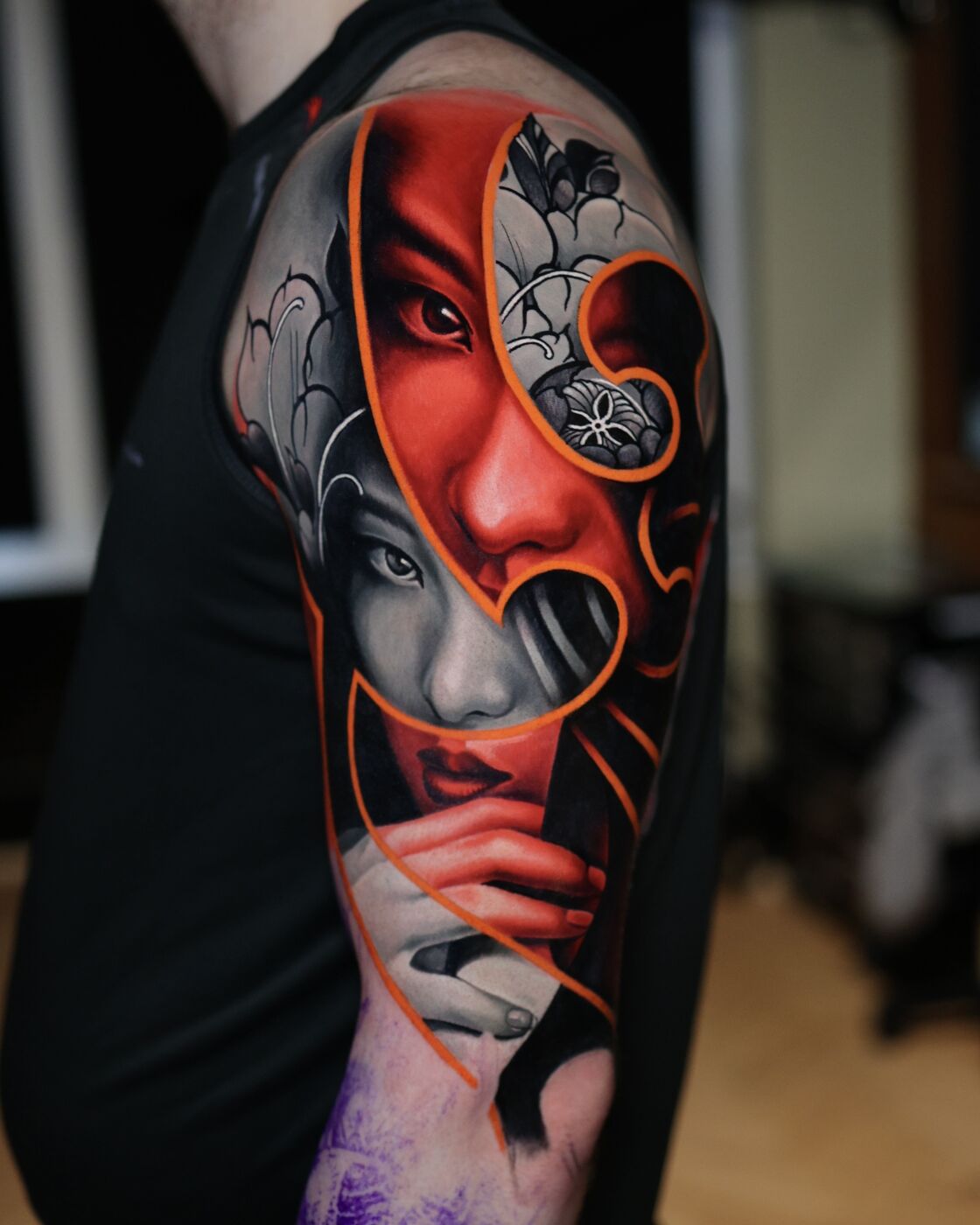
Colour detail · Full sleeve in progress · Volkan Demirci
How to prepare
- Stay well hydrated in the days before — hydrated skin takes ink better and heals faster
- Eat a proper meal 2–3 hours before the session, not immediately before
- Wear or bring loose clothing that gives easy access to the arm — sleeveless or a shirt you can remove easily
- Avoid alcohol for at least 24 hours before — it thins the blood and affects how your skin responds
- Come with a clear brief, reference images if you have them, and questions — the consultation is yours to use
- Clear your schedule for the day — a 5–7 hour session is a full day, not a morning appointment
Healing between sessions
Each session needs adequate healing time before the next — typically a minimum of 6 to 8 weeks. This is not simply about the skin surface healing. The deeper layers of skin need time to fully recover and settle before more work is applied on top.
Rushing this process produces poor results: colour that does not sit properly, linework that blurs, and skin that becomes difficult to work with. A sleeve done over 6 months with proper healing time between sessions will look significantly better than the same work compressed into 2 months.
Aftercare guidance is provided after every session. Touch-ups within the healing period are included as standard.
A full sleeve is a serious commitment — in time, in cost, and in the trust you place in an artist. Choose carefully. Take your time with the decision. And when you are ready, apply for a consultation and have the conversation first.